
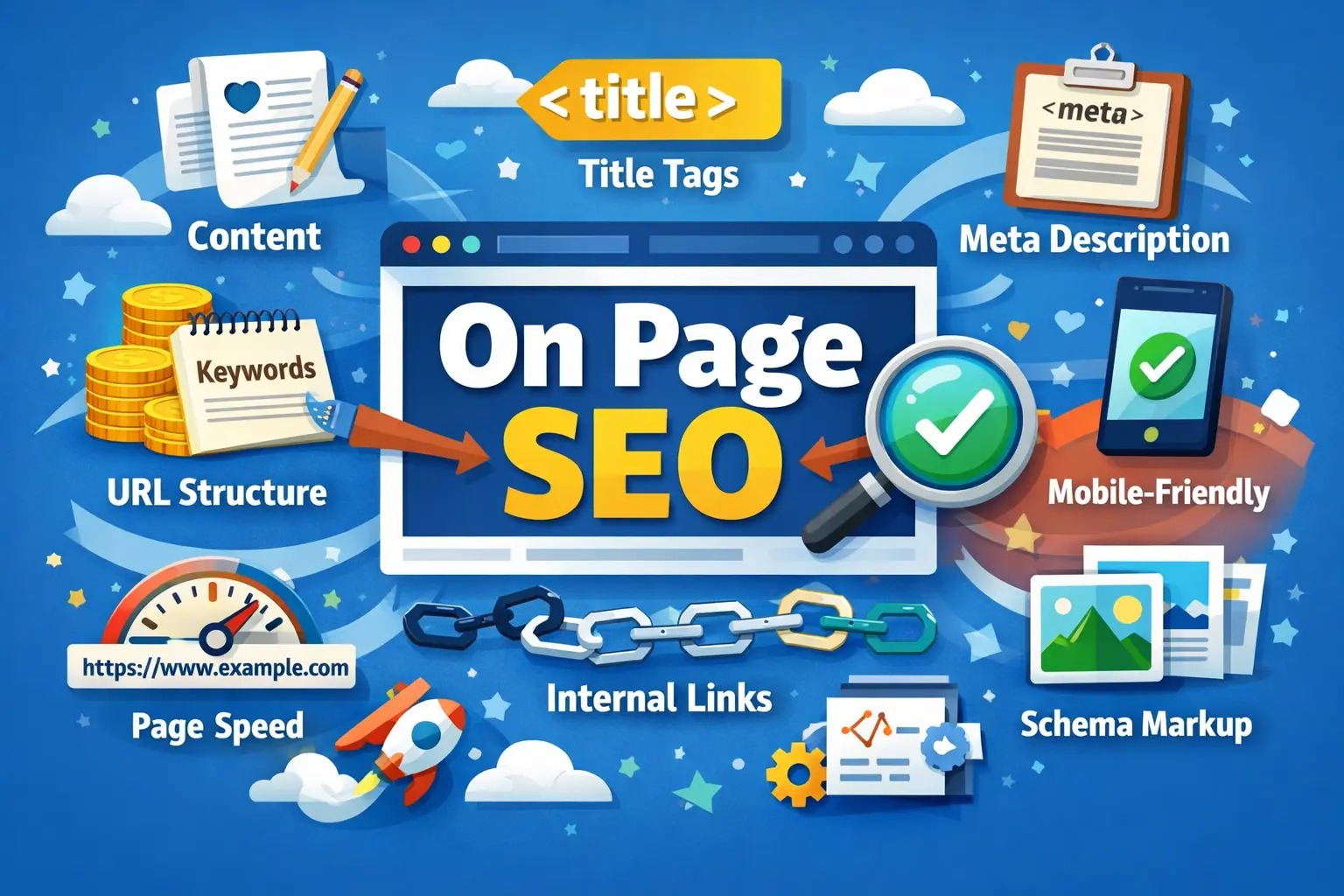
On-page SEO is the backbone of any website aiming to rank high in search engines. On-page SEO helps your content attract the right audience. It keeps them engaged and boosts your search performance.
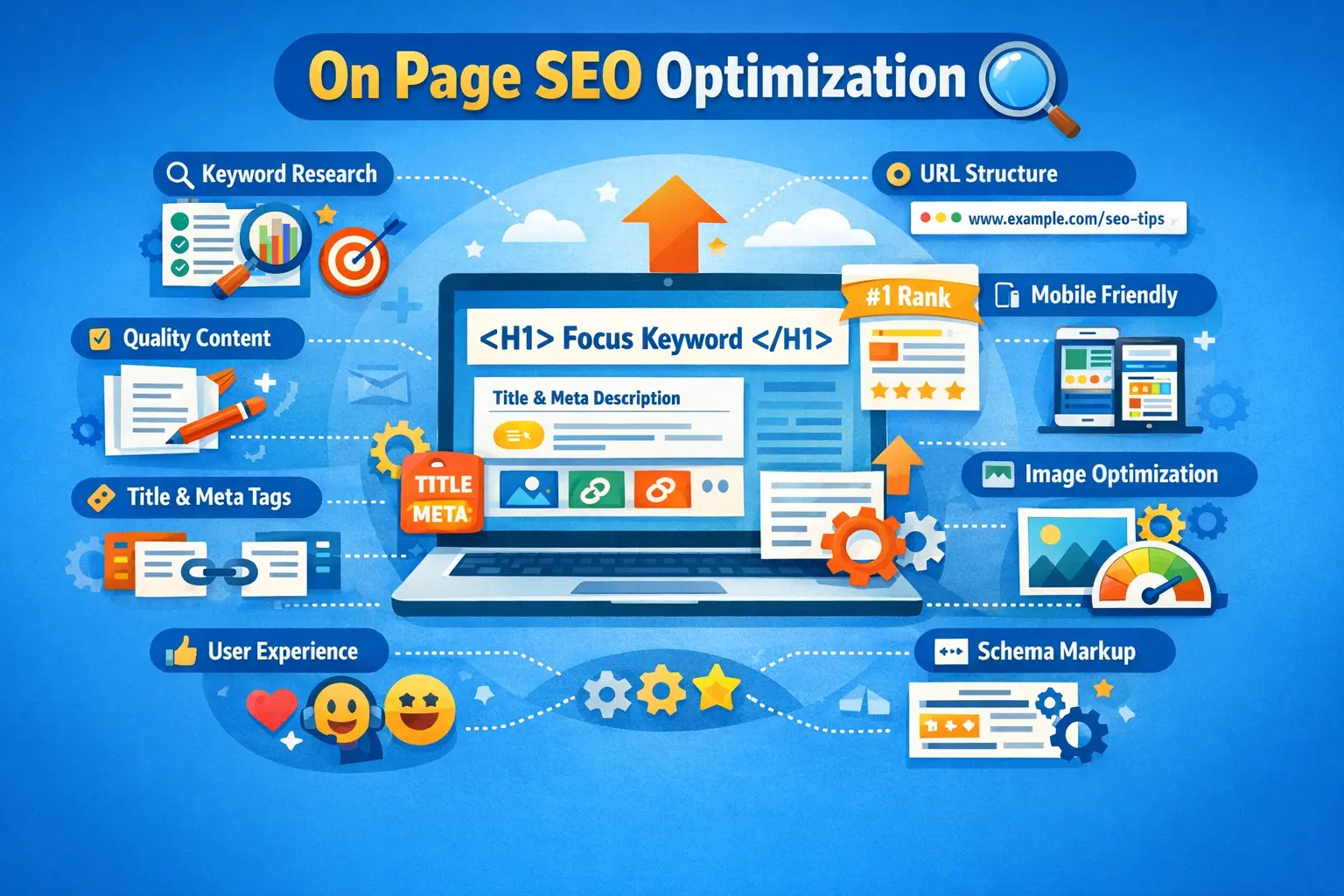
It covers content quality, headings, meta tags, internal linking, URLs, images, page speed, mobile optimization, and schema markup.
What Is On-Page SEO?
On-page SEO refers to optimizing elements within a webpage to improve its search visibility. This includes content optimization, HTML tags, internal linking, URL structure, and user experience signals.
In simple terms, on-page SEO helps search engines understand what your page is about while ensuring users quickly find value.
Why On-Page SEO Is Important
On-page SEO directly influences how search engines evaluate relevance and quality. A well-optimized page provides:
- Clear topical relevance
- Better user experience
- Higher click-through rates
- Improved dwell time
- Stronger ranking signals
Without strong on-page SEO, even powerful off-page efforts like backlinks may become less effective.
Keyword Research for On-Page SEO
A solid on-page SEO strategy starts with thorough keyword research. Identify the main focus keyword, such as “On-page SEO”, and integrate it naturally throughout your content.
Additionally, include relevant supporting keywords like:
- On-page SEO optimization
- Title tag optimization
- Meta description optimization
- Internal linking
- URL structure SEO
- Content optimization
- Image optimization
- Page speed optimization
- Mobile optimization
- User experience SEO
- Headings SEO
- On-page SEO checklist
- Schema markup
- SEO techniques
- On-page SEO factors
Strategic use of these keywords strengthens topical relevance and improves rankings.
Content Optimization
High-quality, clear, and user-focused content is the heart of on-page SEO. Key tips:
- Use short paragraphs for readability
- Naturally place keywords without overstuffing
- Update content regularly
- Provide practical, actionable information
For example, including a sample meta description demonstrates real-world on-page SEO application.
Title Tags and Meta Descriptions
Optimized title tags and meta descriptions are crucial.
- Title Tag: Include the focus keyword early and keep it concise.
- Meta Description: Summarize content naturally for both users and search engines.
Proper optimization in these areas improves click-through rates and avoids duplicate content penalties.
URL Structure
Clean, descriptive URLs improve readability and crawling efficiency.
- Good example: example.com/on-page-seo-guide
- Avoid: example.com/page?id=123
Heading Structure
Headings (H1–H6) help search engines understand content hierarchy and improve user experience.
Best practices:
- H1: One per page
- H2: Importance of Proper Heading Structure in On-Page SEO
- H3: Best Practices for Using Heading Tags
- H4: Use One H1 Tag Per Page
- H5: Structure Content with H2 and H3 Tags
- H6: Add Relevant Keywords and Improve Readability
Optimized headings improve readability, scanability, and alignment with search intent.
Image Optimization and Page Speed
Images enhance engagement but must be optimized:
- Compress images to reduce load time
- Use descriptive filenames
- Add alt text with focus keywords
Page speed is also critical. Minimize scripts, enable browser caching, and optimize Core Web Vitals for a smooth experience.
Mobile Optimization
With mobile-first indexing, mobile optimization is essential:
- Ensure responsive design
- Maintain consistent content across devices
- Enable easy navigation
- Optimize loading speed
Proper mobile SEO improves usability and search rankings.
Schema Markup
Structured data adds context to your content, enhancing on-page SEO.
- Common schemas: Article, FAQ, Product, Review
- Helps improve SERP appearance and eligibility for rich results
- Boosts click-through rates and user engagement
While schema doesn’t directly increase rankings, it complements on-page SEO effectively.
Common On-Page SEO Mistakes
Neglecting on-page SEO can lead to:
- Keyword stuffing
- Duplicate content
- Missing meta descriptions
- Broken internal links
- Thin content
- Poor mobile experience
Regular audits and corrections maintain crawlability, indexability, and ranking stability.
Conclusion
On-page SEO optimizes every element of a webpage to improve visibility, relevance, and user experience. Focusing on keyword placement, quality content, page speed, mobile optimization, and structured data builds a solid foundation for search engine success. Effective on-page SEO amplifies off-page efforts and ensures your website can compete for top rankings globally.