
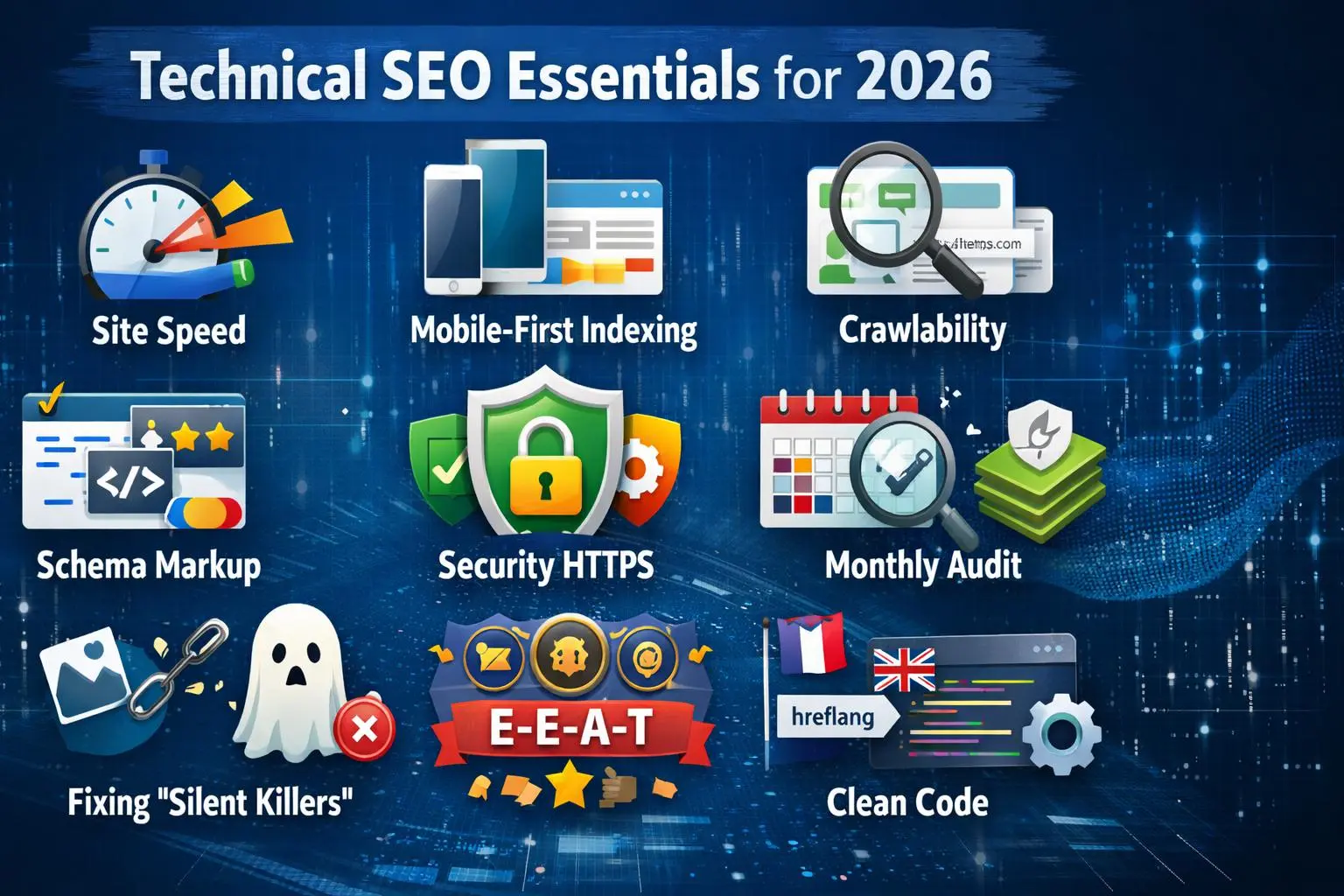
Imagine building a luxury mansion on a foundation of shifting sand. No matter how beautiful the interior design is, the structure will eventually collapse. In the digital world, your content is the interior design, but Technical SEO is the solid concrete foundation. As we move through 2026, search engines like Google have become incredibly smart. They don’t just look for keywords anymore; they look for a seamless, fast, and secure user experience. If your site’s backend is a mess, your rankings will stay at the bottom, no matter how great your writing is.
The Real Meaning of Technical SEO
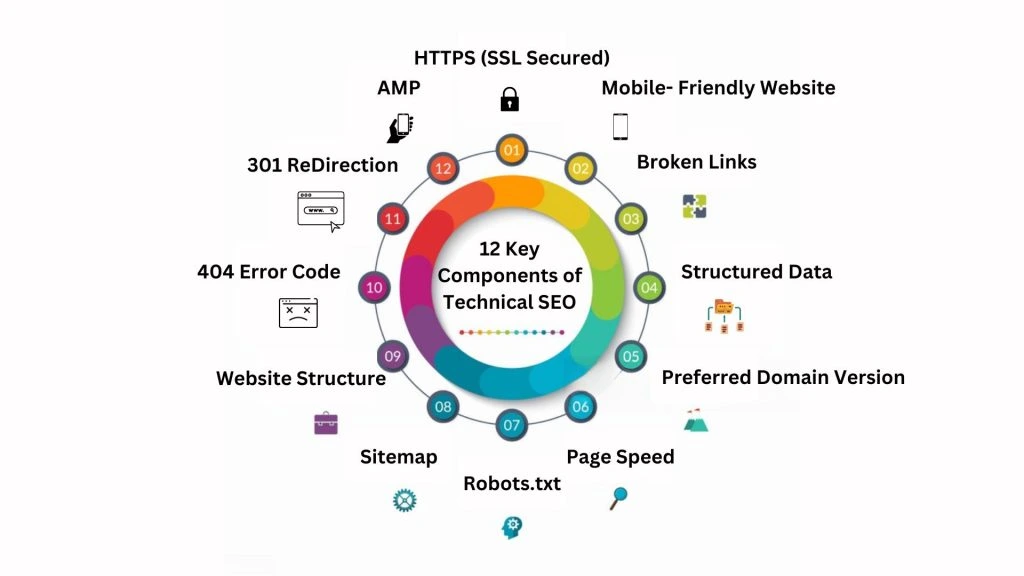
Most people get intimidated by the word “technical.” They think it’s only for hardcore developers. But honestly, Technical SEO is simply about making sure your website is readable for search engines. It’s the process of optimizing your site’s infrastructure so that search engine bots can crawl, index, and eventually rank your pages. Unlike on-page SEO, which is about what people see, Technical SEO is about what the search engine spiders feel when they visit your home.
Why You Can’t Afford to Ignore It
In the past, you could rank a site just by stuffing keywords. Those days are long gone. Today, Technical SEO dictates your visibility. If a bot can’t find your page because your site architecture is confusing, that page might as well not exist. By focusing on a Technical SEO site audit, you uncover hidden issues like broken links or slow server responses that are silently killing your traffic. Consequently, your hard work on content finally gets the attention it deserves.
Site Speed: The Need for Instant Gratification
In 2026, patience is a dead virtue. If your website takes more than two seconds to load, your potential customer is already clicking on your competitor’s link. This isn’t just a user habit; it’s a core ranking factor. Google’s Core Web Vitals have changed the game, and Technical SEO is at the heart of this change.
How to Improve Site Speed for Mobile Users:
- Largest Contentful Paint (LCP): Measures how long it takes for the largest content on your screen to show.
- Stop using heavy formats: Move away from JPEG/PNG; use WebP or AVIF.
- Smart loading: Lazy-load heavy media files.
- Clean the bloat: Minimize CSS & JavaScript execution time.
- High-quality hosting: Reduce server response times.
By reducing server response times and using a high-quality host, you provide a frictionless experience. Accordingly, your Technical SEO score skyrockets, and users stay longer.
Mobile-First Indexing: Desktop is Now Secondary
If your website isn’t optimized for mobile, you’re effectively invisible. Google officially uses mobile-first indexing, meaning it looks at your mobile site to decide where you should rank.
Best Practices for Mobile Optimization:
- Responsive web design
- Touch-friendly navigation menus
- Readable fonts without zooming
- Avoid intrusive pop-ups
A clean, fast mobile experience increase user engagement and Technical SEO.
Crawlability: Giving Search Engines a Roadmap
Think of a search engine bot as a traveler. If your site has no signs or maps, the traveler will get lost. Smart Technical SEO ensures your site is easy to navigate.
Key Crawlability Tips:
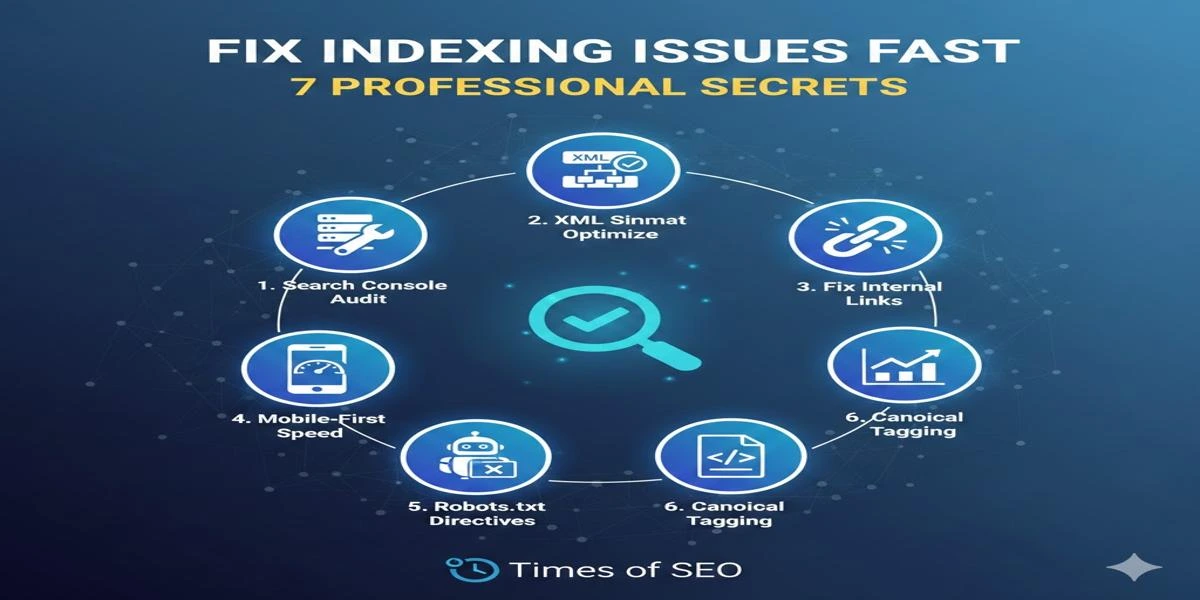
- XML sitemap: Tell Google which pages to prioritize.
- Robots.txt file: Control which pages bots can access.
- Short, descriptive URLs: e.g., yoursite.com/technical-seo-tips
- Canonical tags: Manage duplicate content efficiently.
Schema Markup: Speaking the Language of Robots
Schema markup helps search engines understand your content.
Benefits of Schema Markup:
- Earn rich snippets (star ratings, prices)
- Improve CTR
- Use Article Schema, Local Business Schema, etc.
Security: HTTPS is Not Optional
Trust is everything. Without SSL, browsers warn users your site is “Not Secure,” hurting bounce rates.
Technical SEO Security Steps:
- Site-wide HTTPS encryption
- Protect against malicious link injections
- Maintain secure environment for long-term rankings
Monthly Audit: Staying Healthy
Websites need regular maintenance.
Audit Checklist:
- Check broken internal links (404 errors)
- Fix redirect chains
- Monitor crawl errors via Google Search Console.
- Optimize internal linking structure
Consistency ensures top rankings over time.
Fixing the “Silent Killers” of Ranking
Neglected areas can silently hurt SEO.
Silent Killers to Address:
- Orphan pages (no internal links)
- Missing image alt text
- Unoptimized HTML, CSS, JS
- Breadcrumb navigation issues
- Server log analysis
Every small improvement counts toward a perfect Technical SEO score.
Looking Ahead: E-E-A-T and User Experience
E-E-A-T = Experience, Expertise, Authoritativeness, Trustworthiness.
Technical SEO Contributions:
- Fast-loading, error-free, secure website
- Signals authority and credibility to Google
- AI-driven search engines prefer technically clean sites
Global Performance and Hreflang Tags
For international reach:
- Hreflang tags: Specify language/region for pages
- Avoid duplicate content penalties
- Ensure proper regional targeting
The Importance of Clean Code
Clean Code Best Practices:
- Remove unused plugins
- Shorten scripts
- Maintain readable HTML
- Easier updates & lower risk during Google updates
Conclusion
Technical SEO is the invisible backbone that ensures your website thrives in search rankings. From site speed to mobile optimization, clean code to crawlability, every aspect contributes to how search engines and users perceive your website. Regular audits and maintenance, along with a focus on user experience, structured data, and security, create a robust foundation that supports long-term organic growth. Mastering Technical SEO allows your content to get the visibility it deserves, users to enjoy a seamless experience, and your site to stay ahead of evolving search algorithms. In 2026, those who invest in Technical SEO will not only rank higher but also build lasting trust and authority in their niche.